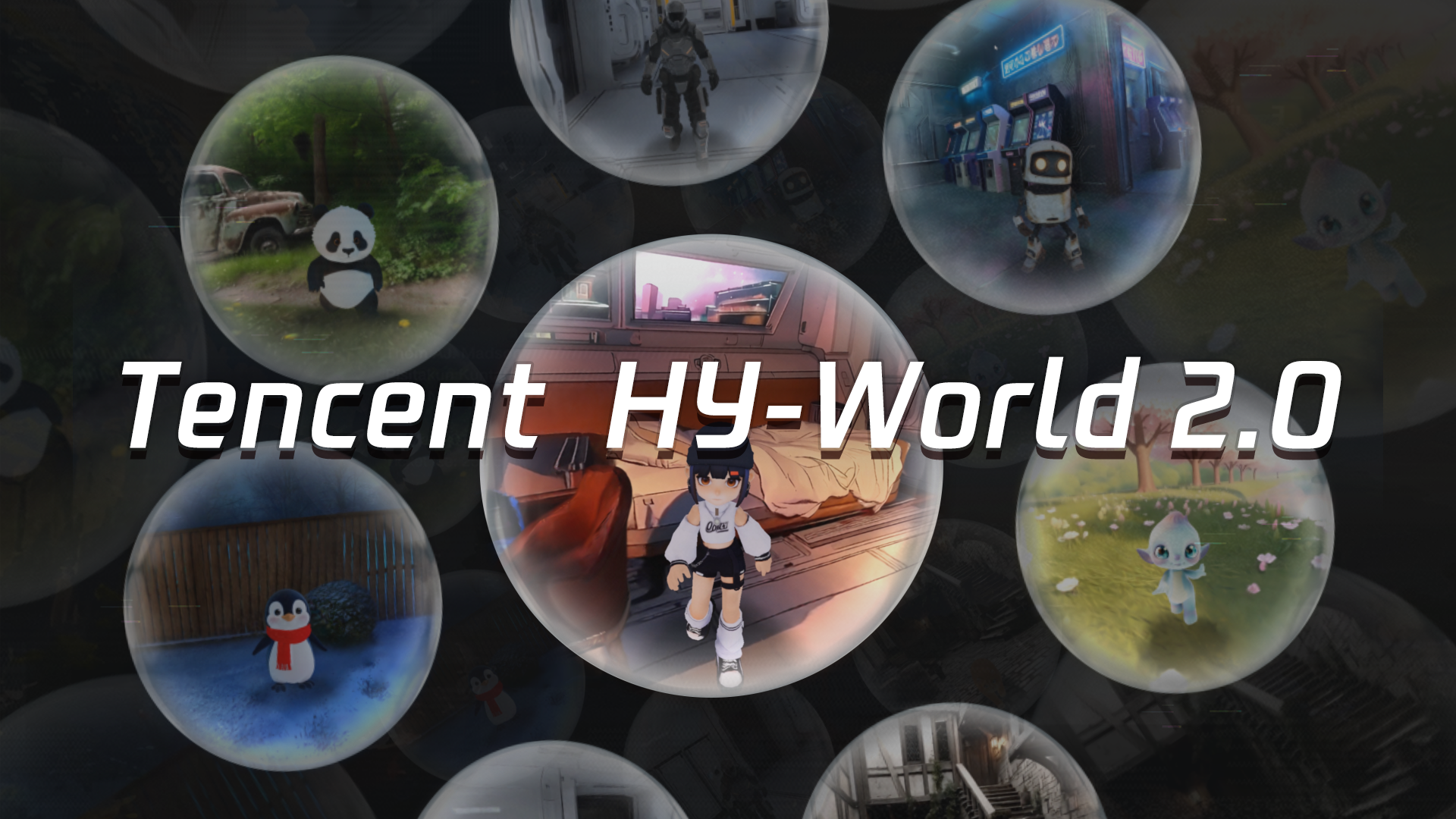
Short answer
HY-World 2.0 is Tencent Hunyuan's open-source multimodal world model for two jobs: generating a navigable 3D world from text or one image, and reconstructing a scene from multi-view images or video. It outputs persistent 3D assets—including Gaussian Splatting scenes, meshes, and point clouds—that can be explored, edited, rendered in real time, and moved into 3D engines.
Key takeaways
Two workflows: Generate a new world from text or one image, or reconstruct an existing place from multi-view images and video.
Real 3D output: Export persistent Gaussian Splatting scenes, meshes, and point clouds instead of a short video that disappears after playback.
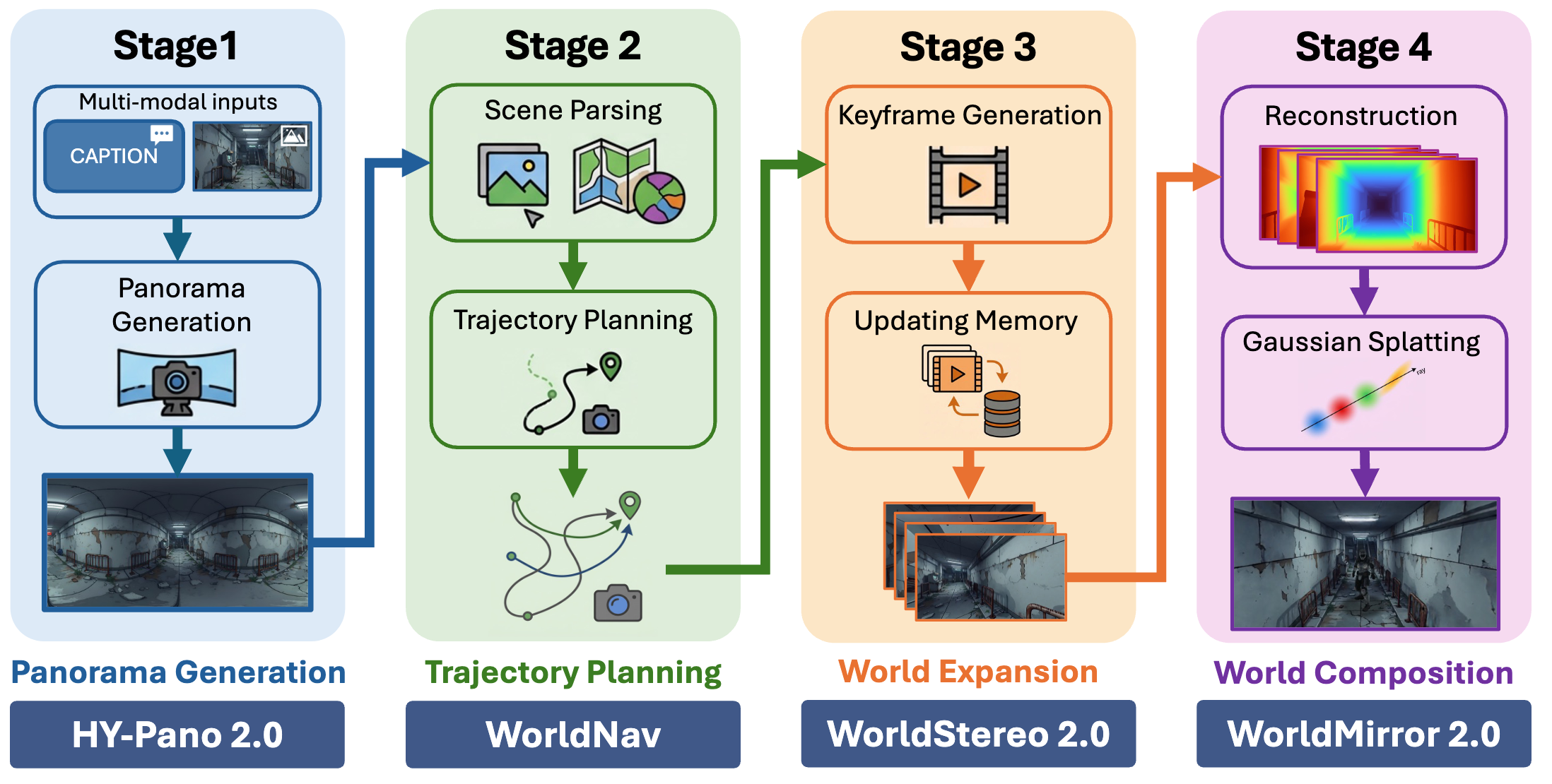
Four-part stack: HY-Pano 2.0 creates the panorama, WorldNav plans movement, WorldStereo 2.0 expands the scene, and WorldMirror 2.0 builds the 3D representation.
Open-source release: Tencent publishes the technical report, inference code, model weights, documentation, and a local WorldMirror 2.0 Gradio viewer.
HY-World 2.0 pipeline at a glance
| Topic | Input | Core work | Output |
|---|---|---|---|
| HY-Pano 2.0 | A text prompt or single reference image. | Generate a complete 360-degree panorama that establishes the world appearance. | A panoramic scene ready for parsing and navigation planning. |
| WorldNav | The generated panorama and parsed scene structure. | Plan obstacle-aware camera trajectories through the environment. | Camera paths and rendered views that define where the world must expand. |
| WorldStereo 2.0 | Planned trajectories, rendered views, and accumulated scene memory. | Generate consistent keyframes and expand unseen areas along each route. | A multi-view sequence with aligned coverage of the larger environment. |
| WorldMirror 2.0 + 3DGS | Generated or captured multi-view imagery. | Estimate geometry and cameras, prepare Gaussian data, then optimize the scene. | A persistent 3DGS world, mesh, point cloud, and supporting spatial maps. |
What HY-World 2.0 Does
HY-World 2.0 is a multimodal system for world generation, reconstruction, and simulation. A text prompt or single image can seed an entirely new navigable environment; a set of photos or a casual video can become a reconstructed digital scene.
The important difference is the output. HY-World 2.0 produces spatial assets—3D Gaussian Splats, meshes, point clouds, depth, normals, and camera estimates—so the result can be revisited from new viewpoints instead of existing only as a fixed camera sequence.
From a Prompt or Image to a Navigable World
World generation begins with HY-Pano 2.0, which creates a 360-degree panorama from text or an image. WorldNav parses the scene and plans obstacle-aware camera paths; WorldStereo 2.0 generates consistent keyframes along those paths while maintaining scene memory.
WorldMirror 2.0 then estimates the geometry and camera information needed for composition, and 3DGS optimization exports the final Gaussian Splatting world. The public command-line workflow breaks this into trajectory planning, trajectory rendering, world expansion, GS data preparation, and 3DGS training.
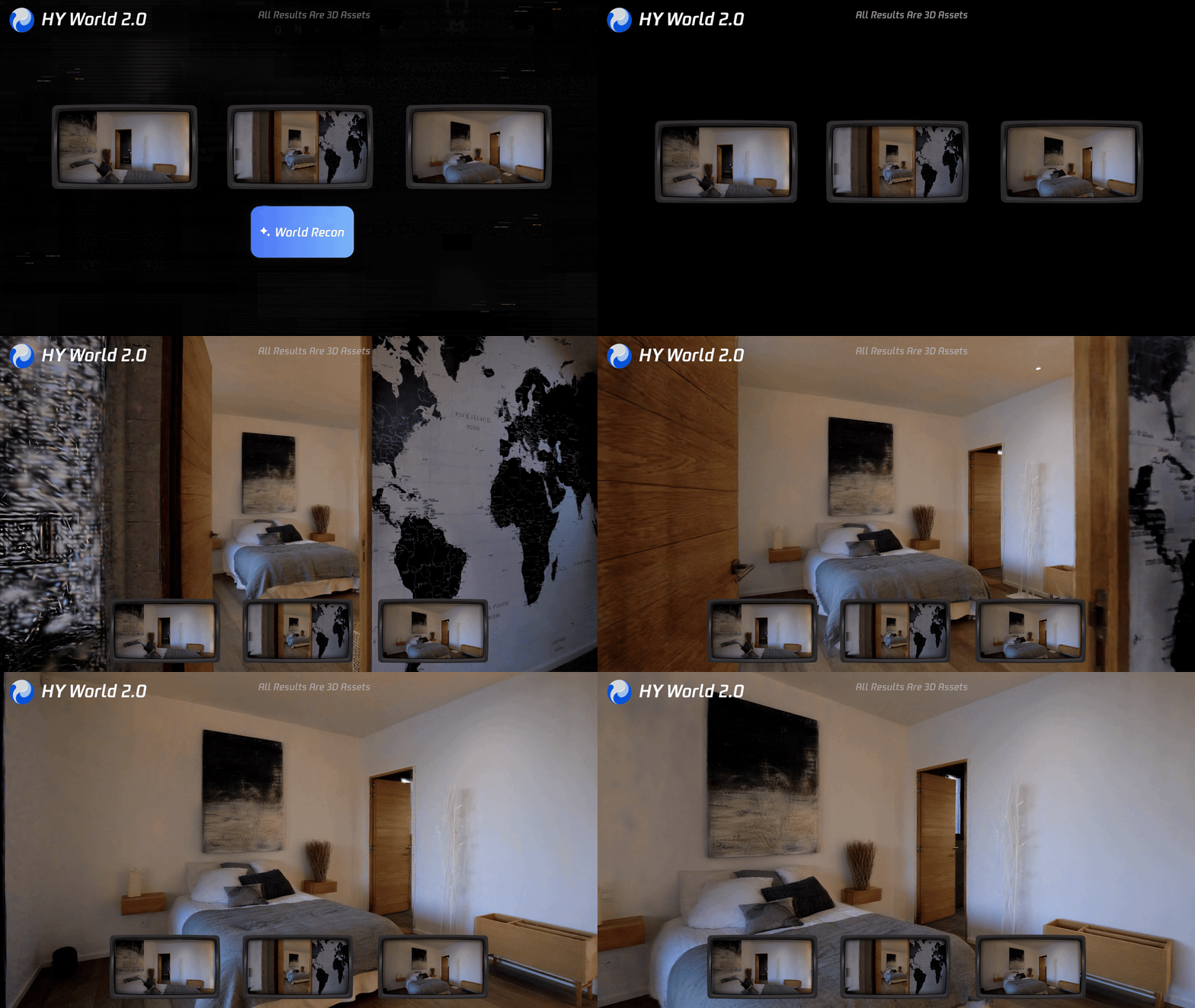
Reconstruct a 3D Scene from Photos or Video
For reconstruction, WorldMirror 2.0 accepts multi-view images or video and predicts dense point clouds, depth maps, surface normals, camera intrinsics and extrinsics, plus 3DGS attributes in one feed-forward pass. Optional camera and depth priors can be injected when they are already available.
The repository includes single-GPU and multi-GPU inference, a Python pipeline, a CLI, and a Gradio app that previews Gaussian Splats, point clouds, depth, normals, and cameras in the browser. Flexible-resolution inference is documented from roughly 50K to 500K pixels.
Persistent 3D Worlds Instead of Generated Video
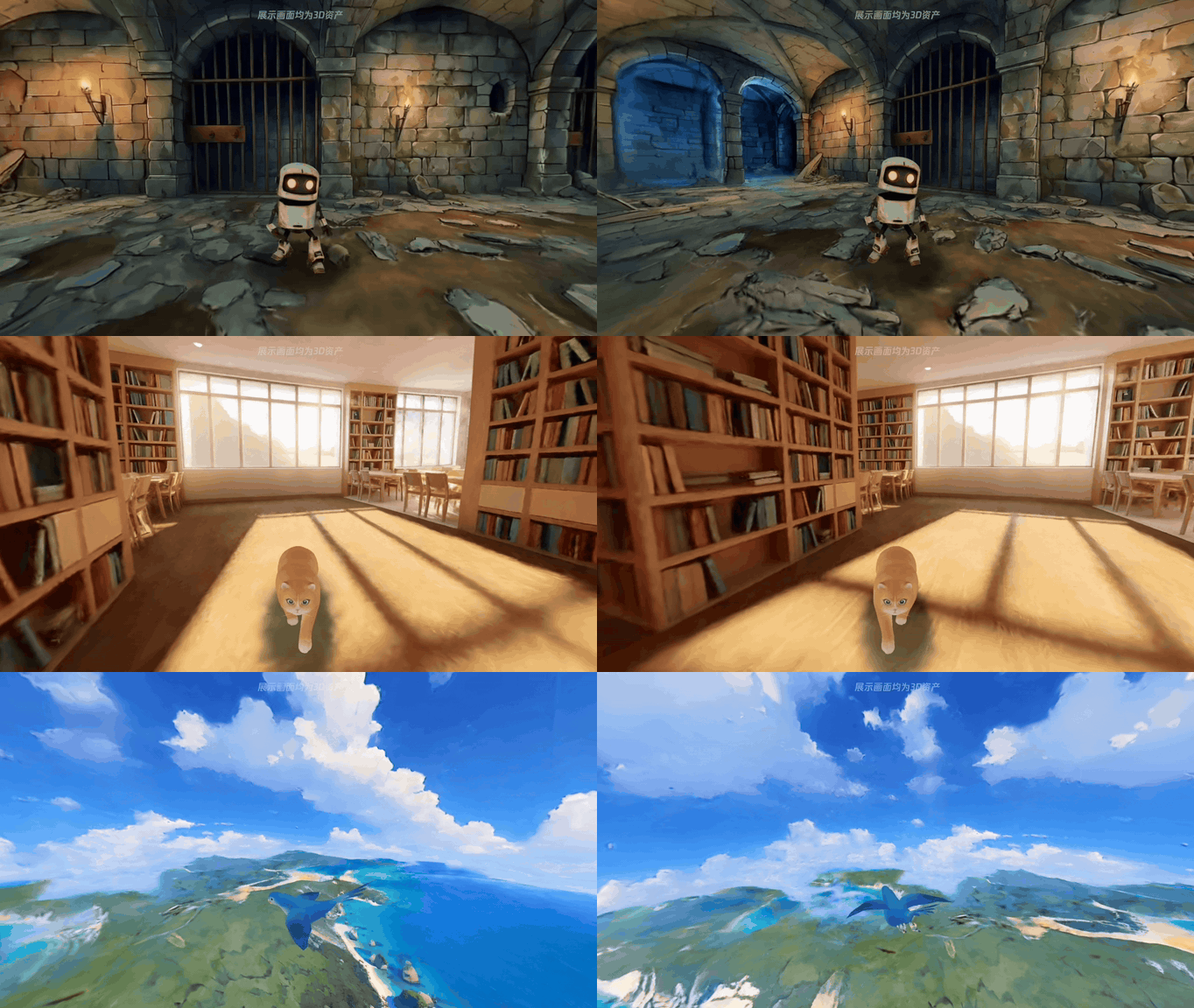
A video world model predicts frames while the camera moves. HY-World 2.0 builds a persistent scene representation, so the world remains available after generation, stays spatially consistent across views, and can be rendered repeatedly without rerunning a generative model for every frame.
That makes the output useful beyond a demo clip: artists can edit it, developers can combine it with game logic, and simulation teams can use the same spatial environment for repeated navigation and testing.
Explore in First Person or with a Character
The official examples show both first-person navigation and third-person character exploration. Physics-based collision gives characters and cameras a usable relationship with streets, rooms, buildings, and terrain instead of simply playing a prerecorded fly-through.
HY-World 2.0 assets are designed for downstream 3D workflows and can be brought into tools such as Blender, Unity, Unreal Engine, and Isaac Sim. Meshes fit conventional editing and collision pipelines; Gaussian Splats preserve rich appearance for high-fidelity novel-view rendering.
Open-Source Models, Code, and Requirements
Tencent has released the full generation inference path, WorldMirror 2.0 reconstruction, HY-Pano 2.0, WorldStereo 2.0, model weights, and technical documentation. The model zoo lists WorldMirror 2.0 at about 1.2B parameters, HY-Pano 2.0 at about 80B, a smaller HY-Pano 2-Qwen at about 425M, and WorldStereo 2.0 at about 17B.
The recommended environment is CUDA 12.8 with Python 3.11 or newer. Reconstruction has the simpler starting path; full world generation adds large models, navigation components, multi-stage rendering, and 3DGS training. The official hosted product received a HY World 2.1 update in July 2026, while the public report and repository document the HY-World 2.0 open-source stack.
Frequently Asked Questions
HY-World 2.0 is Tencent Hunyuan's multimodal world model for generating 3D worlds from text or one image and reconstructing 3D scenes from multi-view images or video.
The generation workflow accepts text prompts or a single image. The reconstruction workflow accepts multiple images or video, with optional camera and depth priors.
It can output Gaussian Splatting scenes, meshes, point clouds, depth maps, surface normals, camera parameters, and related data for editing, rendering, and simulation.
A video model generates a fixed sequence of frames. HY-World 2.0 produces a persistent 3D representation that can be explored from new viewpoints, edited, rendered in real time, and imported into 3D engines.
Yes. The public repository includes the technical report, model weights, reconstruction code, panorama generation, world expansion, and the full world-generation inference pipeline. Usage remains subject to the repository's license terms.
The official documentation recommends CUDA 12.8 and Python 3.11 or newer. WorldMirror 2.0 reconstruction is the simpler entry point; the full generation stack is substantially heavier because it combines large models, navigation, multi-stage rendering, and 3DGS training.
Create the first 3D asset for your world
Turn a reference image into a textured 3D model in the browser, then use it as a prop, character, or scene building block.
Try Image to 3D